
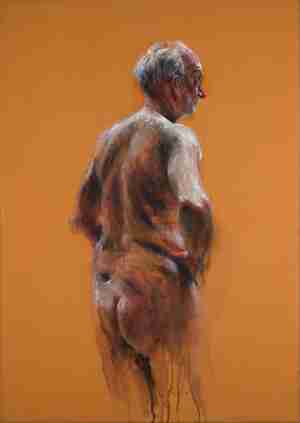
Strength, vulnerability and beauty come together in the exquisite oeuvre of artist Sam Drukker (1957). The renowned Dutch painter and draughtsman has spent his entire life portraying people. His subjects are nearly always nude, stripped of context and embellishment. Using expressive, broad brushstrokes, he creates compelling portraits. Figures emerge, revealing landscapes of skin. For Drukker, beauty and decay are not opposites, but allies. This exhibition presents a selection of Sam Drukker’s finest works exploring the ageing human figure.
On view at MORE Ruurlo from 5 July to 7 February 2027
One single moment
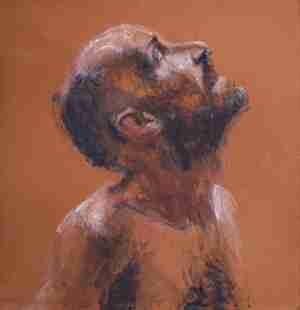
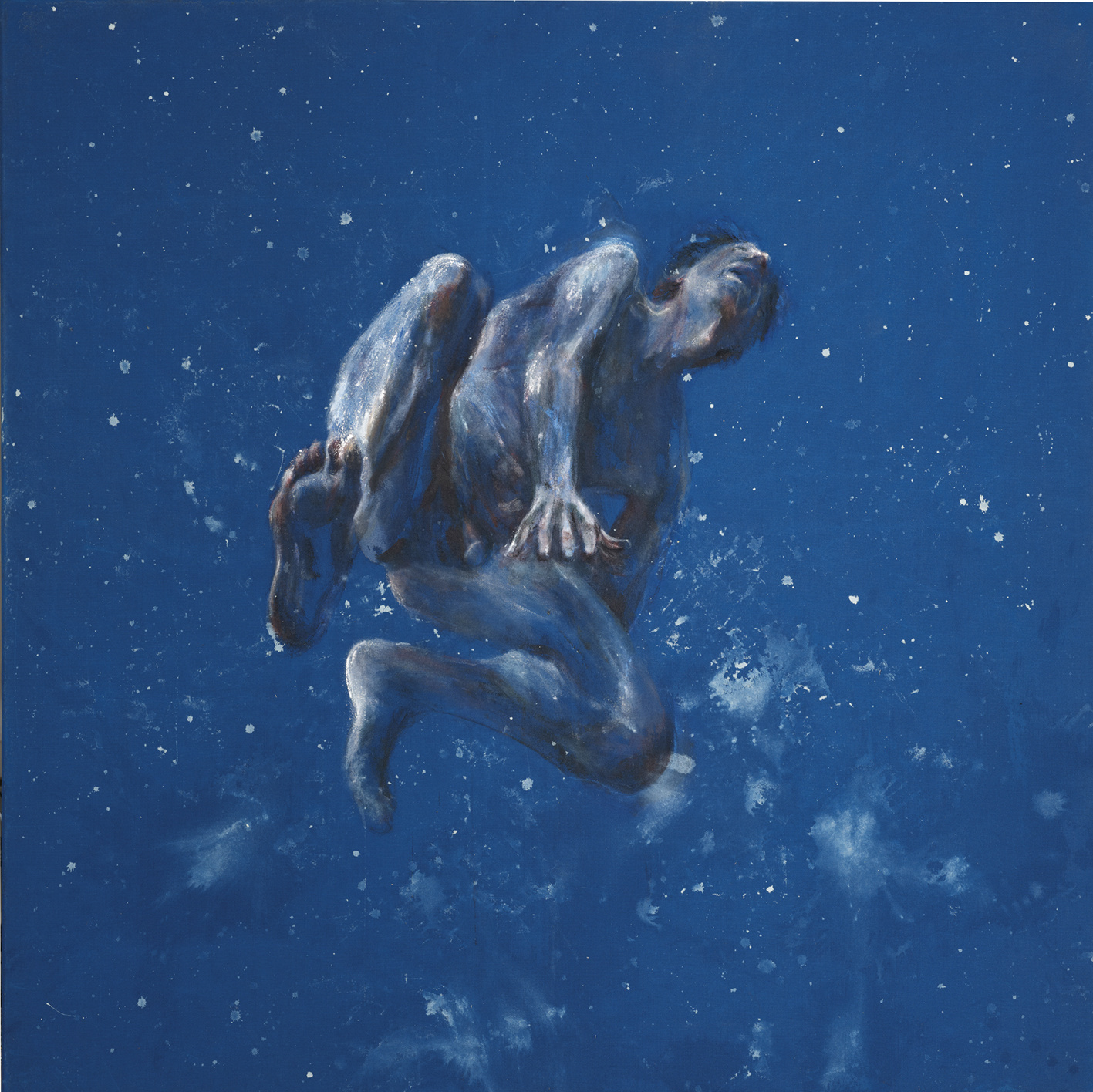
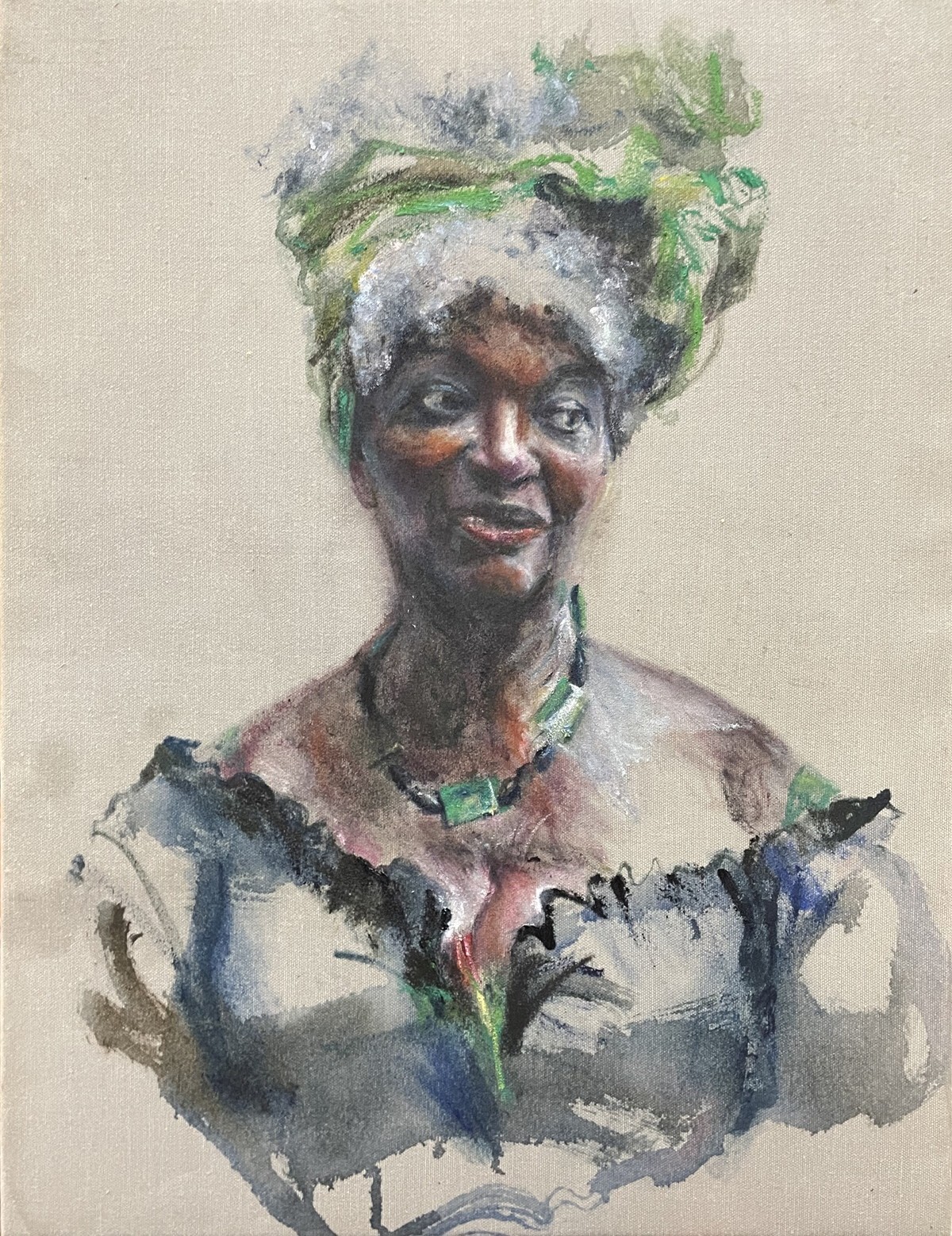
‘How someone wears their skin is far more interesting than how someone wears a beautiful dress,’ said Sam Drukker recently. He portrays people without anything to hide behind, and preferably with as few means as possible. Drukker forces himself to capture the right lines in one go, to place his brushstrokes decisively. To seize a single moment, a moment of vitality. Everything else falls away. Often, no paint remains visible beyond the figure that confronts us. And then he has the courage to stop, leaving the canvas untouched.
Drukker believes there is a misunderstanding about (self-)portraits. He is not interested in psychological interpretation. Language misleads the eye. You have to look. ‘I do not want to know or understand anything. It is only then that you see what lies beneath the skin.’ Drukker uses paint to show the complexity and wondrous contradictions of human beings. In layers. It is easier for him to express himself in paint than in words. ‘There’s no need to formulate with paint. You can do everything at once. I’ve got colour, form, movement… I don’t have a tube of “introvert”.’
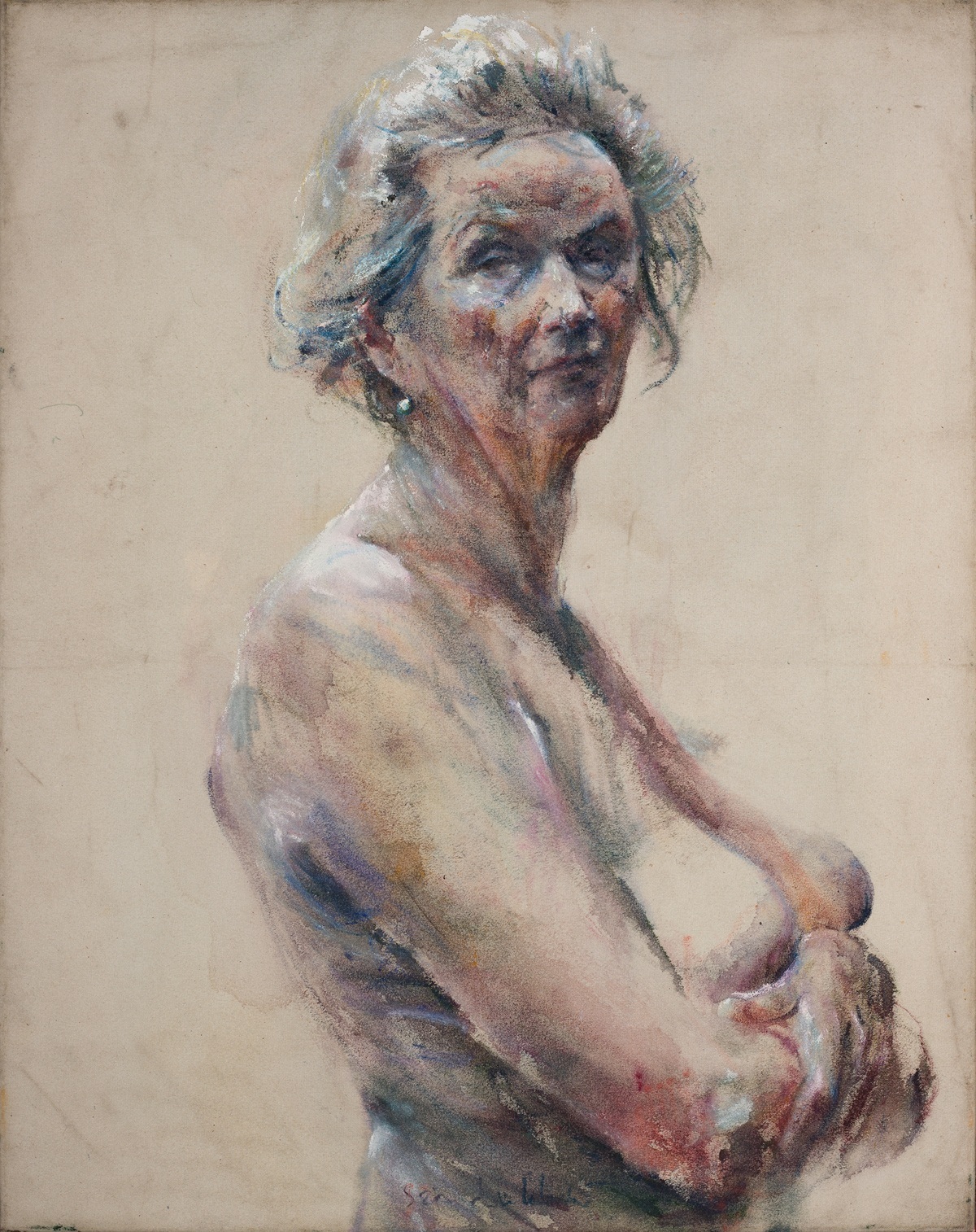
Drukker is also fascinated by decay. A perfectly proportioned body bores him; for Drukker, beauty begins precisely where things deviate, where imperfections become visible. Age plays a key role in this regard. Beauty and decay are not opposites, but allies: one is accentuated alongside the other, but the painter also finds beauty in the process of decay itself.
Traces of life
He therefore enjoys working on material that already has its own history. Alongside canvas, he uses unusual surfaces such as discarded planks of wood, backs of chairs, sailing canvas or tarp. Things that he finds on the street, in skips or at a port. ‘I paint on supports that have already had a life, on which the marks are visible. I respect that life, those marks, that narrative, and add my own.’
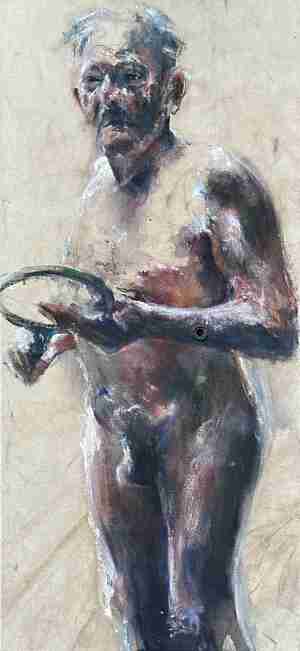
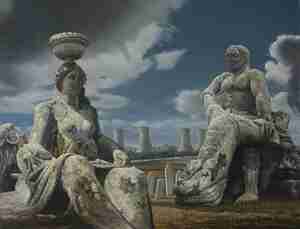
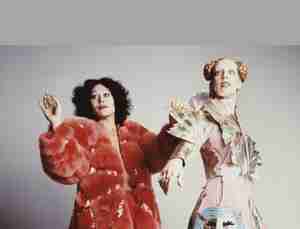
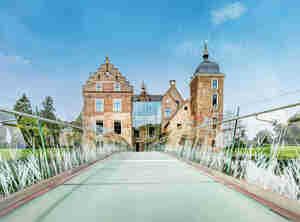
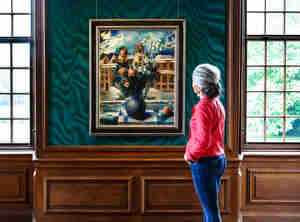
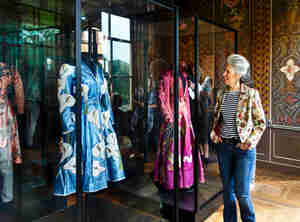
Together with two designer friends, Drukker curated a selection of his works to present in the galleries of Ruurlo Castle. He also created new works that enter into dialogue with the permanent collection – particularly the monumental portrait that Carel Willink painted of his young wife Mathilde, radiant in a creation by fashion designer Fong-Leng. Drukker positions his nude, older figures opposite Willink’s work. The contrast is dramatic and deliberate: Willink’s model is attired and concealed, while Drukker lays bare his models’ skin in all its colours and shades, allowing it to live and breathe.
40 Years of Friendschap
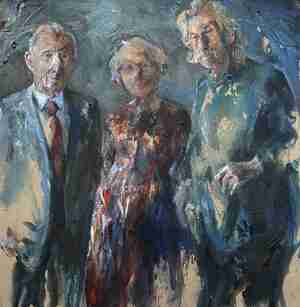
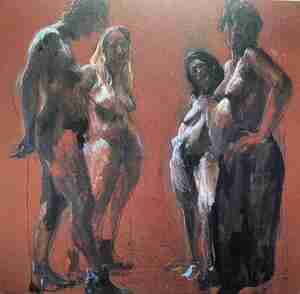
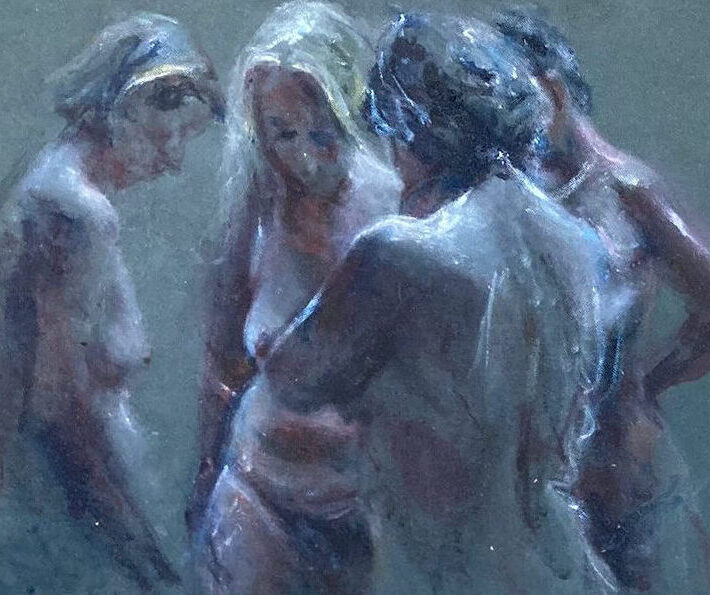
Featuring prominently in the exhibition is the series of group portraits of four women – three decades in the making. Four friends, all of them part of Drukker’s life for more than forty years, modelled for him individually in the 1990s and subsequently together in 1999 and 2025. In the early group portrait, writer Willem Jan Otten saw a painting about fertility.
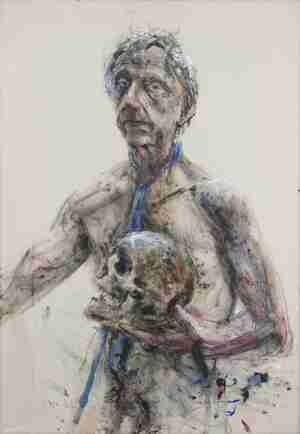
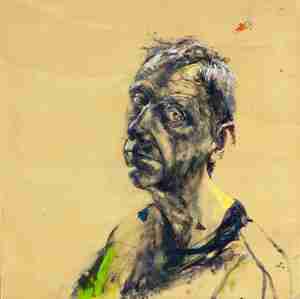
Drukker himself saw something else: the arc between youth and the point at which the first cracks begin to appear, when a new, time-worn beauty emerges. This can be confronting, also for the artist. ‘Suddenly your young mind finds itself in that old body.’ Death permeates Drukker’s oeuvre. The skull – a traditional symbol for memento mori – regularly returns, including in the impressive Self-Portrait with Skull (2026). Drukker is aware of his own mortality, and faces it head-on.
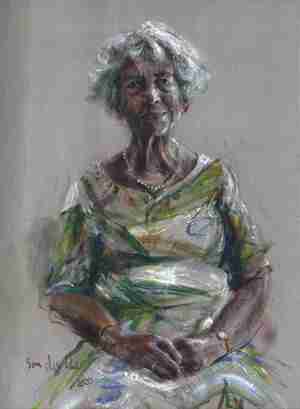
Drukker is best known for his paintings on large canvases. This exhibition also features many of his drawings, revealing another side of his artistry. In some respects, Drukker feels more assured as a draughtsman than as a painter. He uses a dip pen, Indian ink and a small water brush – an unforgiving medium in which nothing can be concealed. ‘For me, drawings have just as much artistic value, or perhaps even more, because they show the soul of the artist.’
The meaning of ripening
The exhibition The Ageing Human is not an elegiac look back, but an exploration of what ripening truly means – in a life, on skin and on canvas. The exhibition is accompanied by a lavishly illustrated art publication featuring an interview with Sam Drukker by Maite van Dijk and a column by Yvonne Kroonenberg. Published by Waanders, the book will be available from early July in the museum shop and webstore.
A media tour featuring Sam Drukker offers additional insights into the artworks on display. The Ageing Human also features a mini-documentary about the artist made by his daughter Lena Drukker (duration: 8 minutes).
Sam Drukker
Sam Drukker (Goes, 1957) is one of the Netherlands’ most successful draughtsmen and portrait painters. He was born in Zeeland, grew up in Drenthe and studied at the Minerva Academy in Groningen. Going against the prevailing trends of the time, he chose a figurative approach and was taught by artists including Matthijs Röling. After graduating, Drukker lived and worked in Paris and spent several years in Barcelona before settling in Amsterdam. Alongside his artistic practice, he teaches at various art academies. In 2011, Drukker was named Artist of the Year.